
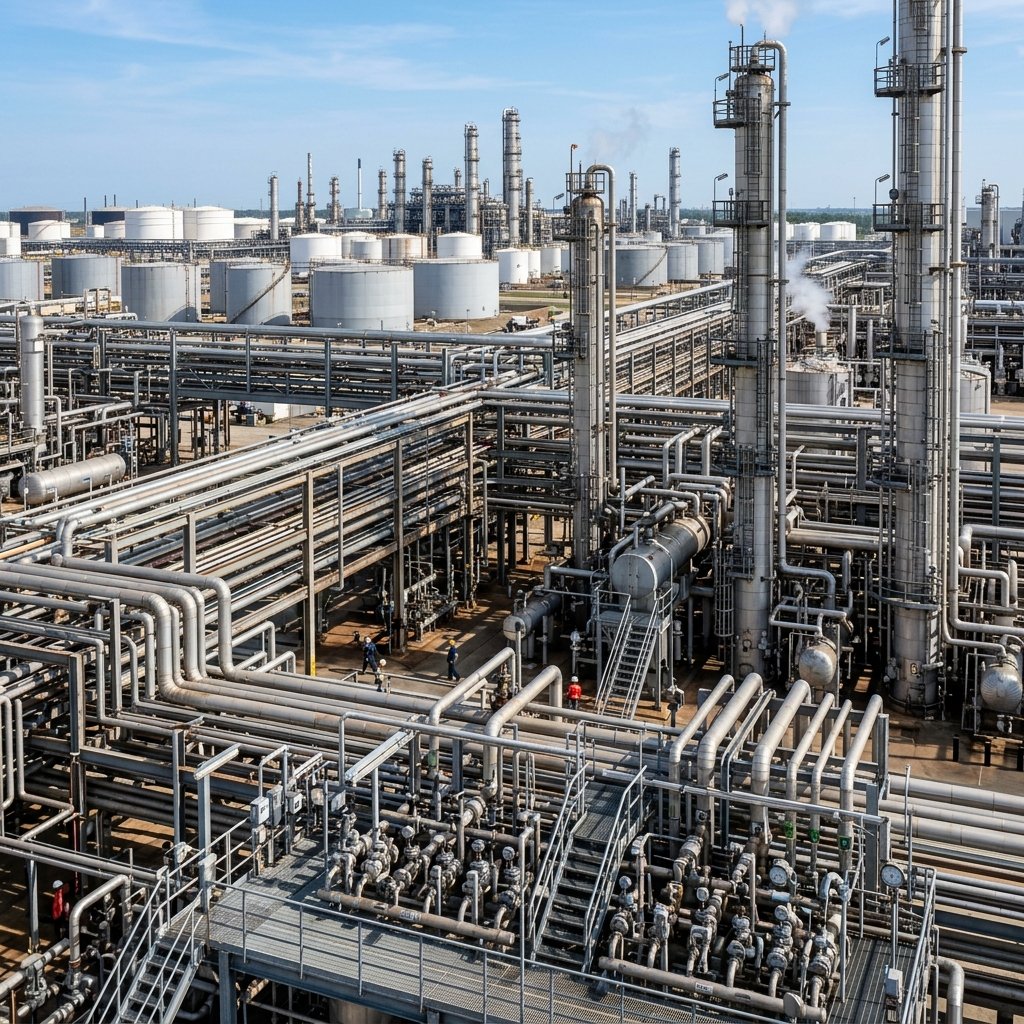
In chemical refineries, pharmaceutical plants, and heavy manufacturing facilities, the process piping system acts as the absolute lifeblood of the facility. Transporting high-pressure steam, hazardous chemicals, and flammable fluids requires materials selection, fabrication precision, and stress analysis of the highest caliber. A single piping failure can halt production for weeks or worse, lead to catastrophic safety breaches.
1. Material Selection: Carbon Steel vs. Stainless Steel and Alloys
Choosing the correct metallurgy is the first line of defense against corrosion, mechanical fatigue, and thermal stress. The selection depends strictly on the fluid's chemistry, temperature, and operating pressure:
- Carbon Steel (e.g., ASTM A106 Gr. B): The workhorse of high-pressure systems. Excellent structural strength, highly cost-effective, and ideal for non-corrosive fluids up to 400°C.
- Stainless Steel (e.g., ASTM A312 TP304/316L): Standard choice for corrosive chemicals, sanitary applications, and high-purity water pipelines. The low-carbon variant (316L) is highly weldable and minimizes carbide precipitation during welding.
- Exotic Alloys (e.g., Hastelloy, Inconel): Selected for extreme environments involving aggressive acids or thermal cycling exceeding 800°C.
2. Adhering to Welding Codes: ASME B31.3
Process piping fabrication in industrial facilities must adhere strictly to the ASME B31.3 Process Piping Code. This international standard outlines design pressures, thermal expansion tolerances, and welding procedure specifications (WPS). Every welder working on these pipelines must undergo rigorous qualification testing, and high-pressure joints must undergo 100% Non-Destructive Testing (NDT), including radiographic (X-ray) or ultrasonic inspection to guarantee penetration and eliminate micro-porosity.
"In high-pressure systems, there is no such thing as an 'acceptable' weld defect. The difference between a lifetime of flawless operation and a sudden pressure blowout lies entirely in the weld metallurgy."
3. Thermal Expansion & Pipe Stress Analysis
When high-temperature steam or chilled fluids pass through a rigid metal pipe, the pipe expands or contracts. If the pipe is restricted by rigid supports, massive thermal stresses build up, leading to flange leaks, pipe buckling, or pump nozzle damage.
To mitigate this, mechanical engineers perform advanced Stress Analysis using specialized software such as CAESAR II. By modeling the pipeline's exact geometry and temperature profiles, engineers design:
- Expansion Loops: U-shaped piping sections that flex safely to absorb thermal elongation.
- Spring Hangers & Guides: Flexible support fixtures that allow controlled movement in three axes.
- Anchor Blocks: Heavy concrete or structural steel pillars that isolate piping loads from delicate rotating machinery.
Turnkey Process Piping Services by Projexel Engineering
At Projexel Engineering, we provide complete, certified process piping systems. From detailed isometric drawings and CAESAR II stress analysis to heavy shop pre-fabrication and certified orbital welding, our teams ensure your process pipelines are fully optimized, safe, and built to stand the test of time.